
The AI Everything Trap
The case for vertical AI

I’ve finally come to accept that unless I move off the grid, I’ll never escape Polsia AI ads.
If you haven’t seen them: Polsia promises “AI That Runs Your Company While You Sleep,” and features testimonials from average Joes who wake up to new customers and cash. According to the founder, Polsia raised $30M at a $250M valuation, with nearly $10M in ARR and a team of one.

Impressive, until you notice the 1.8-star Trustpilot rating, the vocal critics, and the spam allegations. My read: the founder is doing a media blitz before people realize the emperor has no clothes.
But Polsia is just a symptom of a larger problem: the AI everything business, or “horizontal AI.” Ryze AI uses AI to run all your marketing, including ads, SEO, landing pages, and e-comm stores. Ema AI is a “Universal AI Employee” for every role in your enterprise. The narrative is great for fundraising, but I think it’s a losing long-term strategy.
In this article, I explain why horizontal AI gets crushed by vertical AI, and what a more durable approach looks like. Anyone not interested in reading the full article can find a summary here.
Come for the Wrapper, Stay for the Moat
One of my favorite articles is the classic, “Come for the tool, stay for the network” by VC Chris Dixon. Dixon shares examples of companies that attracted users with a simple, single-player tool, then parlayed that into a network with built-in stickiness.
The most well-known example is Instagram. Instagram initially attracted tons of users with innovative photo filters. If they’d stopped there, they would have eventually been copied and rendered obsolete. But by turning their critical mass of users into a vibrant social network, they created a highly addictive platform with high switching costs.

A similar principle applies to AI companies: it’s okay to start as a compelling AI wrapper, but the key is to build toward a long-term moat; otherwise, your long-term prospects are bleak.
The Most Powerful Moats in AI
So what does a durable AI moat actually look like? In my view, there are three that are most powerful in the current environment:
Data Moat / Intelligence Layer
Your product gets smarter the more a specific customer type uses it, compounding in ways a general model can’t replicate.
Abridge, which uses AI to transcribe and summarize doctor-patient conversations, is a great example of this. Their product has been trained on millions of real conversations, with each additional one making the model smarter.

Workflow Integration
Your tool becomes load-bearing infrastructure in how a team operates, making switching costly.
Cursor, the AI coding agent, fits this model. Once a developer’s muscle memory, custom rules, and codebase context are all baked into Cursor, switching to a competitor means starting over on all of it. The workflow integration is both technical and behavioral.

Ecosystem and Community
Partners, power users, and evangelists build their livelihoods around your product, creating a web of vested interests that no competitor can quickly replicate.
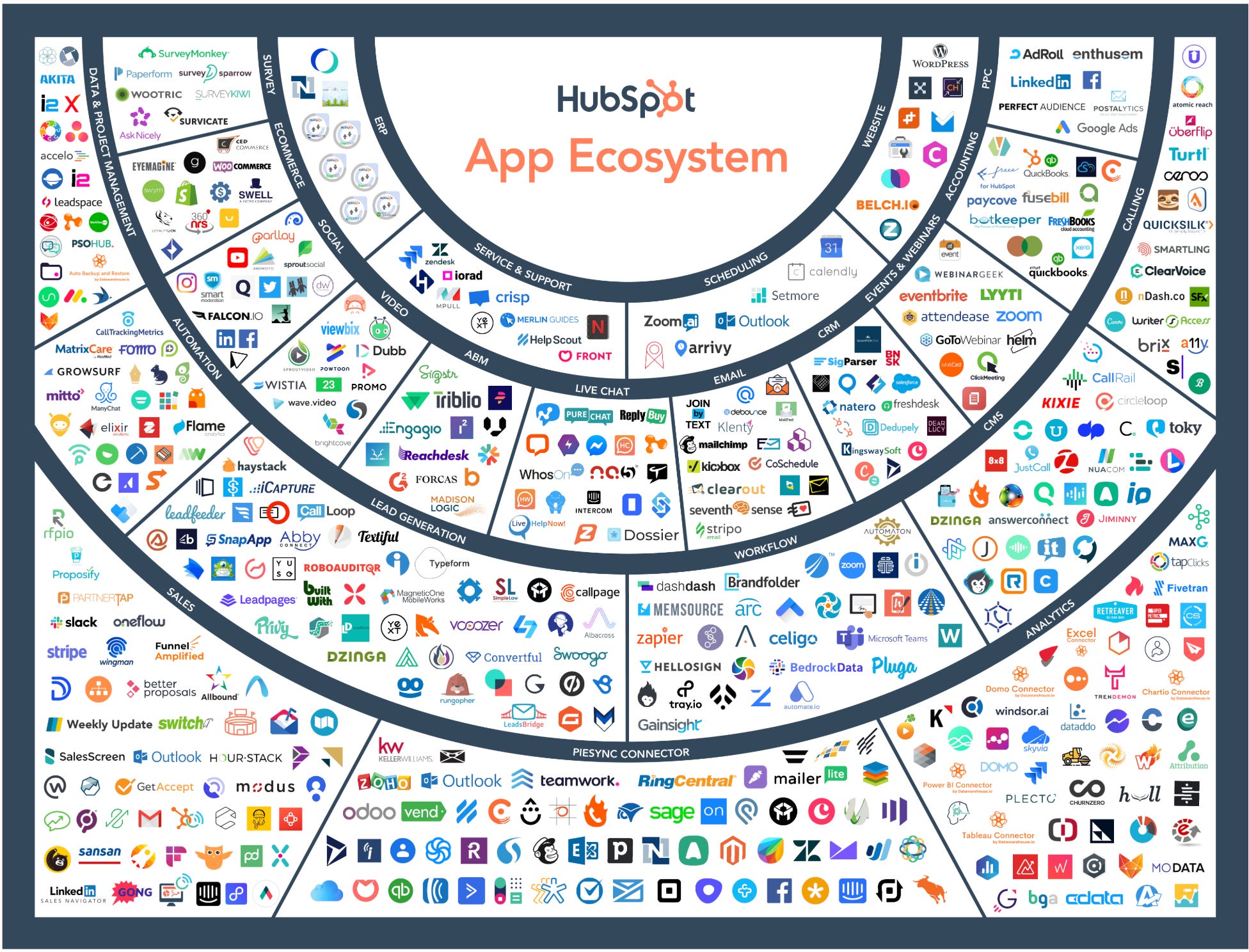
HubSpot, the marketing, sales, and CRM platform, has done a great job of this. They built a certified partner ecosystem of thousands of agencies whose entire business model depends on selling and implementing HubSpot. Those agencies then evangelize to their clients, train their teams, and actively resist competitive threats because their livelihood is tied to HubSpot’s success.
The Jack of All Trades Problem
Horizontal AI solutions promise the world, but by starting so wide, they set themselves up to fail.
Without a clear ICP, there’s no consistent set of pain points to solve and no critical mass of clean data, so there’s no data moat. Workflows differ from one customer to the next, making it impossible to build the kind of deep integration that creates switching costs. And by trying to appeal to everyone, they’re unlikely to inspire the devotion that builds vibrant ecosystems and communities.
Left without a viable path to any of these moats, horizontal tools are destined to remain AI wrappers. They may get initial traction and even make solid early revenue, but without defensibility, they’re a sitting duck waiting to be copied by an enthusiastic vibe coder with Codex or Claude Code.

The Vertical AI Playbook
The antidote to horizontal AI isn’t complicated, but it requires discipline.
Start with an ICP that feels almost too narrow. Not “SMBs” or “marketers,” but “HVAC replacement companies in the Sun Belt” or “EMTs at large urban fire departments.” The narrower the wedge, the faster the data compounds and the deeper the workflow integration gets.

Then, before you build a single feature, decide which moat you’re building toward. A data moat business looks fundamentally different from a community business from day one. Most founders build features and hope a moat emerges. The ones who win engineer it from the start.
Early traction only matters if you’re capturing the right signal. What data are you collecting? What workflows are you embedding into? Who could become a partner or evangelist? If you can’t answer those questions, you’re acquiring users, not building a moat.
The goal isn’t to stay small forever. Nail one ICP, build the moat, then expand from a position of strength.
Conclusion
Look, I get it. The “AI everything” pitch is compelling. Massive TAM, bold promise, narrative that sells itself to investors and customers alike. Some of these companies will raise large rounds, get press, and post impressive revenue numbers.
But without a moat, every win is temporary. A more focused competitor is always one funding round away from taking your lunch.
Build narrow. Build deep. Build something that gets harder to leave every single day.
If you liked this content, please click the <3 button on Substack so I know which content to double down on.
TLDR Summary
Many “AI everything” companies promise to automate entire businesses, but these horizontal AI solutions often lack a durable competitive advantage.
While broad AI platforms may generate early buzz, they struggle to build the three most important AI moats:
Data Moats
Workflow Integration
Ecosystems & Communities
The strongest AI companies start narrow, solve a specific problem for a specific audience, and deliberately build defensibility over time.
Companies like Abridge, Cursor, and HubSpot demonstrate how focused products become increasingly difficult to replace.
The future belongs to vertical AI companies that go deep in a niche, not horizontal AI companies trying to serve everyone.
Key Steps and Insights
1. Being an AI Wrapper Is Fine... Temporarily
The article draws on Chris Dixon’s famous concept: “Come for the tool, stay for the network.”
Instagram initially attracted users with photo filters, but its long-term success came from building a social network around those users.
AI companies can similarly start as useful wrappers around existing models, but they eventually need a moat if they want to survive.
2. The Three Most Powerful AI Moats
Data Moat / Intelligence Layer
The product gets smarter as more customers use it.
Customer-specific data creates compounding advantages competitors cannot easily replicate.
Example: Abridge, whose medical AI improves through millions of doctor-patient conversations.
Workflow Integration
The product becomes deeply embedded in how users work.
Switching becomes painful because users have built processes, habits, and custom configurations around the tool.
Example: Cursor, where developers build workflows, rules, and context directly into the platform.
Ecosystem & Community
Customers, partners, and evangelists become economically invested in the platform’s success.
Example: HubSpot’s agency partner ecosystem, where thousands of agencies build their businesses around HubSpot.
3. Why Horizontal AI Struggles
The article argues that broad “AI for everyone” platforms face several structural challenges:
No clear ICP (Ideal Customer Profile)
No consistent customer pain points
Limited opportunity to build proprietary datasets
Weak workflow integration
Difficulty creating passionate communities
As a result, many horizontal AI businesses remain little more than AI wrappers that can be copied by competitors with access to the same underlying models.
4. The Vertical AI Playbook
The recommended alternative is simple:
Start Narrow
Focus on a highly specific customer segment:
HVAC replacement companies
EMTs in urban fire departments
Specialized healthcare providers
The narrower the niche, the faster data and workflow advantages accumulate.
Design the Moat First
Before building features, decide:
Are you building a data moat?
A workflow moat?
A community moat?
Many founders build features first and hope defensibility appears later. The strongest companies engineer their moat intentionally from day one.
Expand Later
Win a narrow market.
Build defensibility.
Expand outward from a position of strength.
The article compares this approach to Amazon, which famously started by selling books before becoming “The Everything Store.”
Conclusion
The “AI everything” narrative is attractive because it promises massive markets and explosive growth. But broad AI platforms often struggle to develop meaningful defensibility. Without a moat, success becomes temporary and competitors can quickly copy what you’ve built.
The better approach is to start with a narrow ICP, build deep expertise and defensibility, and expand only after creating a durable advantage. In the AI era, the winners won’t be the companies trying to do everything. They’ll be the companies that become indispensable to someone.