
6 Red Flags When Taking Growth Advice from Online Influencers
Filter noise and find what works

I can’t count the number of times I’ve had close friends send me social media posts or podcast episodes with advice from well-known growth or GTM influencers. “This sounds unreal - have you tried this?!” Almost without fail, the answer is ‘yes’, and it’s either massively overhyped or crucial context is being omitted.
In this post, I share six red flags to look out for when attempting to apply growth advice you find online. Anyone not interested in reading the full article can find a summary here.
The 6 Red Flags
As a quick disclaimer, when I refer to these points as red flags, it’s under the assumption that you are uncritically applying the advice to your own business with firm conviction that it will work as advertised. If you follow certain growth or GTM influencers (e.g. Shaan Puri or Nick Huber) for new ideas, perspectives, or entertainment, that’s a different story. Now, onto the red flags:
#1 - Hyped up language
If you see phrases like, “This prints money” or “this is so easy it feels unfair”, run for the hills. Growth is a competitive, zero sum game, with serious competition. Human attention is limited, and on most ad platforms or social media sites, you’re fighting to get visibility in a limited number of high-profile placements.
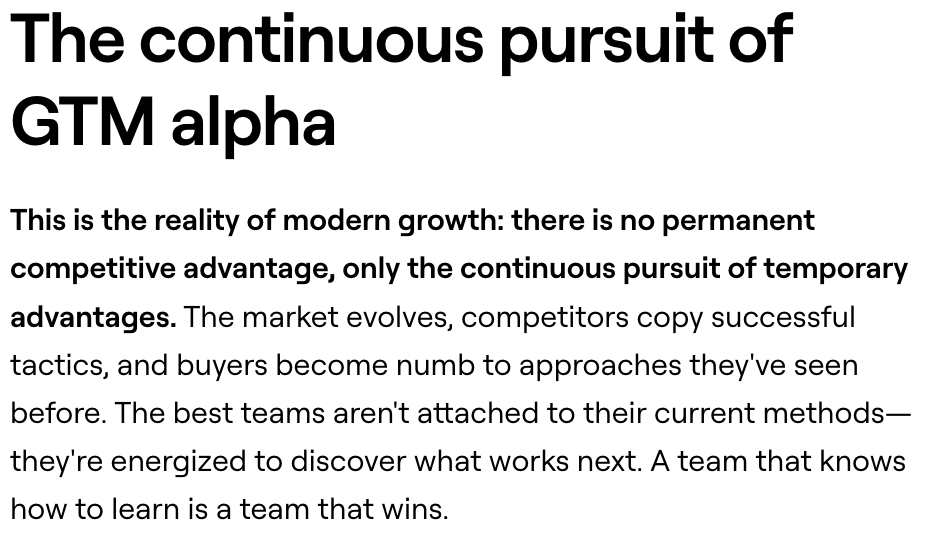
This is why Clay talks about the need to constantly refresh your playbooks and strategies to generate GTM Alpha and stay one step ahead of the competition. If you’re getting growth advice online and it’s already been seen by 1,000+ people, it’s already too late.
#2 - Outdated advice
Sometimes, the person giving advice has the track record to back up what they’re saying. Maybe they’ve used paid ads to scale their business to millions of dollars or built up a social media following to hundreds of thousands of subs. With that said, the industry changes fast. If their documented success happened years ago (especially pre-AI), there’s a good chance their suggested tactics have diminished in effectiveness.
#3 - The idea laundry list
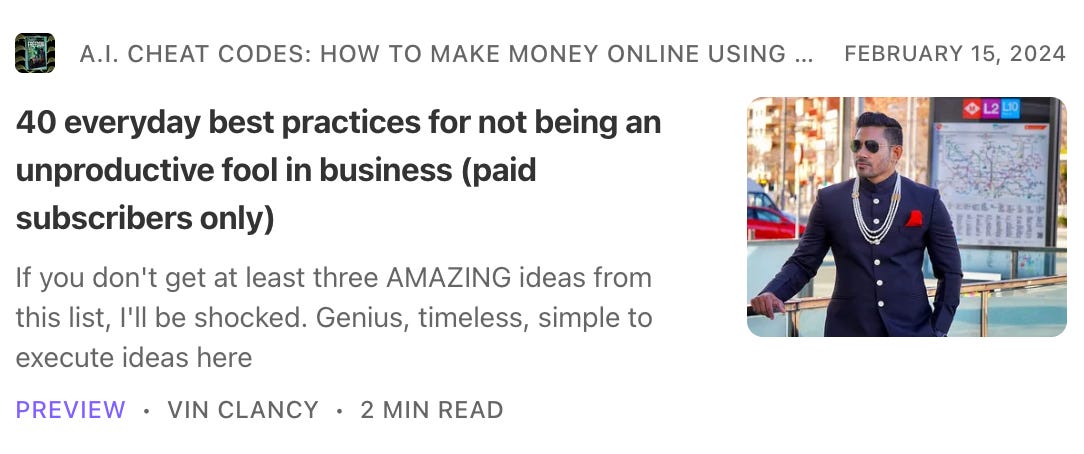
Some influencers love to riff on ideas. If you see titles like “50 ways to scale your business” or “30 ways to use AI to grow faster”, you might get inspired, but be cautious about taking the advice too literally.
#4 - They think ripping off the competition is a revolutionary strategy
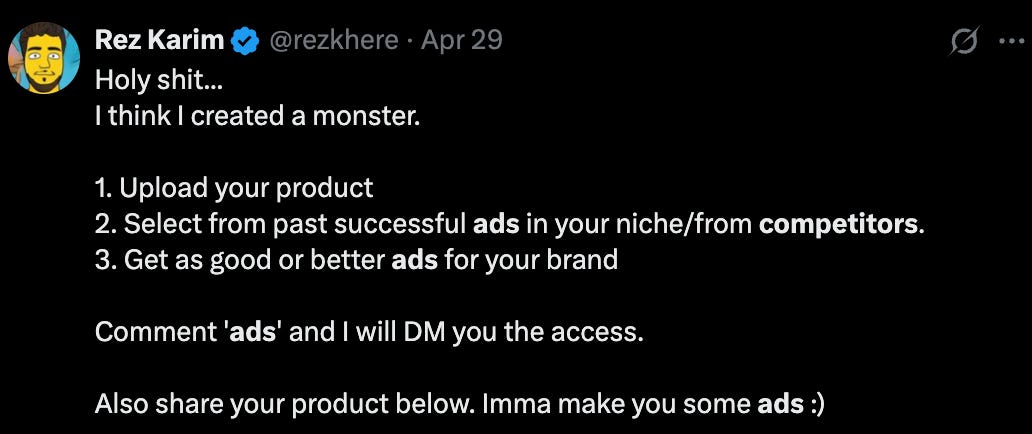
I see a lot of social media posts that talk with fervent enthusiasm about ripping off the competition. They’ll say things like, “Copy your competitor’s top ranking LinkedIn posts!” or “Here’s how to clone your competitor’s best landing pages!”. Oftentimes, there is value to studying the competition, but doing so isn’t particularly novel and is not likely to give you much of an edge in the market.
#5 - Overly general advice that lacks numbers
The best, most practical advice are timely, data-driven, step-by-step case studies. A post like, “A step-by-step guide on how I scaled my AI consulting business from $0k to $100k MRR” is likely to be very good. A post like, “Growing an AI consulting business is easy. Just do these ten things” is likely hot air and won’t work as advertised.
High-level rule: if the post doesn’t include screenshots or videos with specific examples, it’s likely not a good recipe for success.
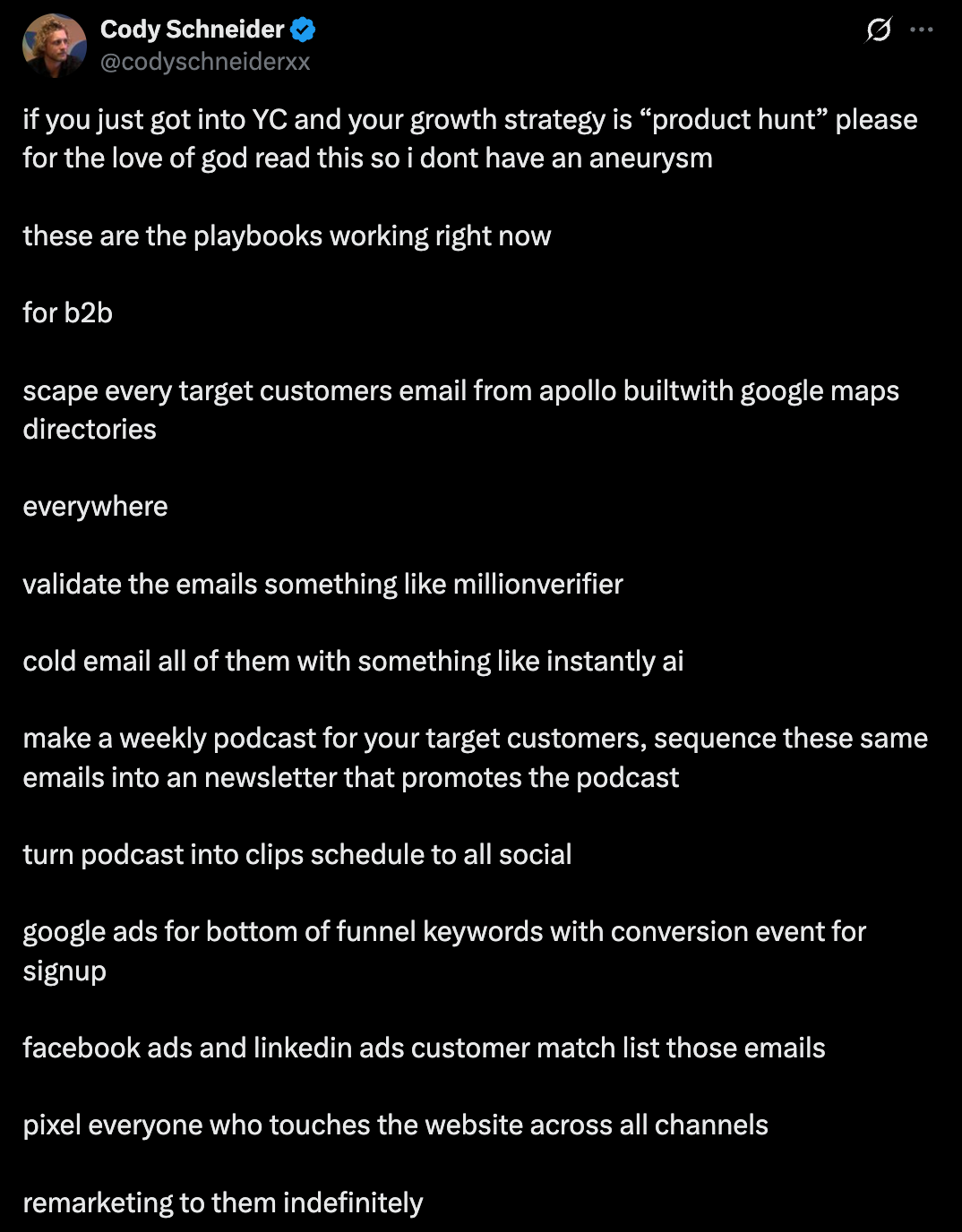
#6 - Crucial context is omitted or not called out
Sometimes, the advice is excellent, but crucial context is left out. For example, maybe the influencer scaled a brand that already had a strong reputation or they have skills or expertise you’re unlikely to match.

For example, a former client of mine wanted to send their paid ad’s traffic straight to a Demo page they created that didn’t include much context or information about their brand. When I grilled them on this, their rationale was, “We copied the structure of Hubspot’s demo page”, without considering that Hubspot is so well-known, they don’t need an introduction.
Conclusion
Most growth advice online sounds compelling but collapses without context. Hype, outdated tactics, and vague generalities are everywhere and applying them blindly can do more harm than good. Treat every “proven strategy” as a data point, not a guarantee.
If you liked this content, please click the <3 button on Substack so I know which content to double down on.
TLDR Summary
I break down six major red flags to watch for when consuming growth and GTM advice online. Much of what’s shared on social media sounds compelling but lacks context, substance, or originality. By learning to spot these patterns, you can save time, avoid costly missteps, and focus on insights that actually drive results.
Key Points
Hyped-Up Language - Beware of claims like “this prints money.” Growth is competitive and nuanced; if a tactic is already viral, it’s likely outdated.
Outdated Advice - Many influencers share strategies that worked years ago, often before major shifts like the AI boom.
Idea Laundry Lists - Posts promising “50 growth hacks” may inspire ideas but rarely offer actionable, proven strategies.
Copycat Tactics - Mimicking competitors’ ads or posts isn’t innovation; it’s imitation that rarely provides an edge.
Vague, Number-Free Guidance - The best insights come from specific, data-backed case studies; not generalized platitudes.
Missing Context - Even great advice can fail if you don’t share the influencer’s reputation, resources, or audience trust.
Conclusion
Most growth advice online collapses without context. Hype-driven and generalized strategies can mislead more than they help. Treat every “proven” tactic as one data point among many: something to test and adapt, not blindly follow.
Yes! This is the kind of clarity the growth space needs. Growth isn’t about louder headlines, it’s about sharper thinking. This piece nails it!!
Good call, thanks James!